
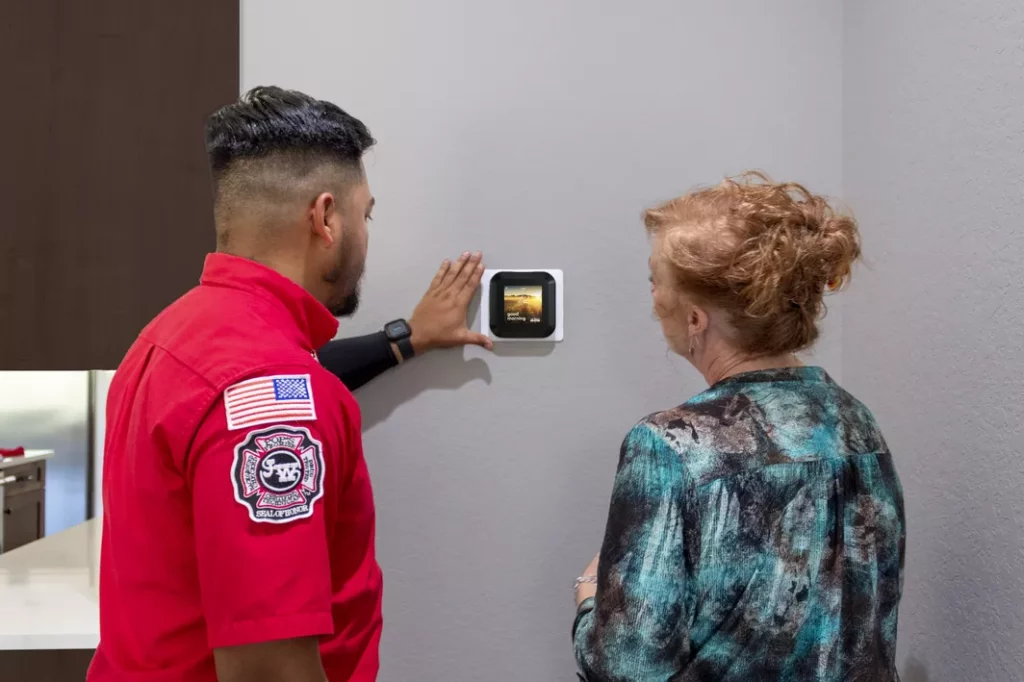
As HVAC contractors, we frequently get asked what’s a good temperature for heat in the winter. The answer is it depends, but typically, it shouldn’t be higher than 70 degrees if you don’t want to pay sky-high power bills. Keep reading to learn more about the best ways to use your thermostat for energy savings in winter, including:
- Recommended thermostat settings for comfort and savings
- Adjusting temperatures when you’re away or sleeping
- Factors that influence the best winter thermostat setting
- Common mistakes to avoid with winter thermostat use
Key Takeaways:
- Set your thermostat to 68 to 70 degrees during the day while you’re home.
- Reduce temperatures to 60 to 67 degrees when you’re away.
- If you’re going on vacation, drop your thermostat to 50 to 60 degrees.
Using a smart thermostat is a great way to automate your home’s heating schedule so you don’t have to remember to make the adjustments manually.
Save on Heating Costs With Jon Wayne’s HVAC Services
Get a smart thermostat installed through our smart home services. We’ve earned thousands of 5-star reviews for our rapid response times and commitment to integrity, honesty, and convenience.
Recommended Thermostat Settings for Comfort and Savings
According to the U.S. Department of Energy, the best temperature to set your thermostat in winter to save money is between 68 and 70 degrees Fahrenheit during the day while you’re home. If you’re comfortable with cooler temperatures, you can drop your daytime temperature further to lower your heating costs.
If you plan on adjusting temperatures throughout the day based on whether you’re home or at work, a smart thermostat is a wise investment. These devices automate your climate control based on the schedule you program.
Adjusting Temperatures When You’re Away or Sleeping
There’s no need to waste costly energy by heating your home if no one’s around to benefit from it. If everyone leaves your home for several hours per day at the same time, you can reduce the temperature by 7 to 10 degrees and then warm it up while people are there and awake. If you can drop temperatures this month for 8 hours daily, you can save up to 10% on your heating costs.
Overnight, while everyone’s asleep and warm in bed, you can drop the temperature similarly. At night, the best temperature for your heater in winter is between 60 and 67 degrees. This doesn’t just promote lower power bills; it also improves your sleep quality.
If you’re planning a winter vacation, don’t forget to adjust your thermostat accordingly. You shouldn’t turn it off completely, as you don’t want to risk frozen pipes. However, you should set your heat to 50 to 60 degrees Fahrenheit to reduce your power bill.
Adjusting your temperatures manually to account for all these shifts can be a hassle. A programmable thermostat will save your schedule and stick to it.
Factors That Influence the Best Winter Thermostat Setting
While the above provide general guidelines, keep in mind that the right temperature for your specific home can vary with the following factors.
- Home size: Larger homes require more heating power to maintain their temperatures. You might opt to keep your larger home slightly cooler to offset this.
- Your home’s insulation: If your home is well-insulated, it’ll retain heat better. This allows you to reduce your thermostat without affecting how often your heater has to run. Older, poorly insulated homes often require you to keep your thermostat set higher to maintain a comfortable temperature.
- Personal tolerance levels: If you’re sensitive to the cold, you might have issues lowering your thermostat.
- Children or elderly household members: Children and elderly people often can’t tolerate cold temperatures as well as the average adult. You may need to keep your thermostat slightly warmer to achieve this.
- The temperature outdoors: In San Antonio, temperatures are usually pretty mild in the winter. You may be able to leave your heater off during the day and still maintain a comfortable temperature.
- Type of heating system: Heat pumps are generally more energy efficient than furnaces. The savings on the energy bill sometimes gives homeowners the leeway to raise their indoor temperature without raising their bill.
Common Mistakes to Avoid With Winter Thermostat Use
Some common mistakes can drive up your energy bill in the winter. When setting your thermostat, make sure you don’t:
- Adjust your thermostat too frequently. This causes your heater to work harder and less efficiently.
- Set your thermostat too high. This can drive up your energy bill.
- Forget to change your air filter. Clogged or dirty air filters impede airflow, resulting in your heater working harder and raising your energy bill.
- Block vents or registers with furniture. As with a clogged duct, this restricts airflow and increases bills.
Upgrade to a Smart Thermostat With Jon Wayne
If you’re ready to automate your home’s heating schedule with a smart thermostat, check out our smart home services. Our expert technicians always get the job done right the first time, 100% satisfaction guaranteed.